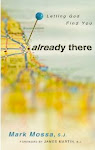
Reading Already There?

There's more to the experience than just the book. Find it here.

Friday, February 6, 2009

Another First


Tomorrow I'm helping with First Confessions for the first time.

I've been duly advised -- Don't Laugh!


So, I'll be putting my serious face on.

Contribute to a Legacy, and Get Something for Yourself and a Friend

Michael Dubruiel, Catholic author and husband of well-known Catholic blogger/author Amy Welborn, died suddenly this week. Please pray for Amy and her family.

Amy and Michael have contributed a lot to our Church community, so many are wondering how to give back. Amy has suggested that people purchase Michael's books, especially The How-To Book of the Mass, the proceeds from which are designated for the children's college fund.


As a new priest, I know that we can all use a little help from time to time to deepen our understanding and experience of our participation in the Mass, and other sacraments like confession. Michael's work was dedicated to helping us do just that.

So, today I bought two copies each of Michael's How-To Book of the Mass, and his A Pocket Guide to Confession. I'll keep one copy of each in my library, and give the other two away.

It seems to me this is a great way to enrich your faith life, that of a friend, and help out a family in need at the same time. If you're able, I encourage you to do the same.

But, most importantly, keep Amy and her family in your prayers.

Monday, February 2, 2009

Story, Authority and Hard-Heartedness


My homily from this past Sunday:

If you are familiar with the stories of fantasy epics like The Lord of the Rings, or the Chronicles of Narnia, or even the Matrix, you already know something about the background of today’s readings. The stories open in a dark time, a time when the glories of the past are a distant memory, and the future is uncertain. Some believe that there is someone who will come to make everything right again. Others believe that such beliefs are nothing but false hope. Those who exercise authority all seem flawed. It’s hard to know who to trust. The best thing to do might be just to look out for yourself and make the most of the time you’ve been given. But some look to the prophecies and promises of the past, and see a new hope unfolding.

Our readings today inspire similar sentiments. And this is not just any story. It’s our story. God speaks to us first through the person of Moses, who tells God’s chosen people, “A prophet like me will the Lord, your God, raise up for you among your own kin; to him you shall listen.” This is just the beginning of the epic story of our ancestors in the faith told to us in the Old Testament. In each generation after Moses, a prophet like him is called forward to be the “new Moses,” and it is by means of that prophet that God continues to speak to his people. Two weeks ago we heard the story of the calling of Samuel, one of the many prophets who would act as Moses’ successor among the Jewish people. Yet, it was also around the time of Samuel that the people asked for more. They looked at the other nations around them and told God that they wanted a king, like them. God warned them that this was not a good idea, but they insisted and God gave them a king. Among the many problems this new situation posed was that of conflicting authority. Though the prophet was often called upon to advise the king, there was often a difference of opinion as to who had the greater authority. Those who know the story of King David and Bathsheba know that when the king abused his authority in having Bathsheba’s husband killed, Samuel’s successor the prophet Nathan was sent by God to tell him so. Eventually such tensions tore the kingdom into two, and the prophets and the kings stopped coming.

So, just as Gondor suffered a period without a king, and Narnia suffers numerous times from the absence of the hero Aslan, so the Jewish people endured a dark time during which the promised prophets were called no longer. This is where we find ourselves at the beginning of Mark’s gospel today. We get the sense that there are those who have been long on the lookout for something new, searching for that new voice of authority that they don’t hear in their church leadership. And suddenly Jesus appears and there is something different about him. He not only inspires one to listen, but even evil spirits obey his authority. As the citizens of Middle Earth suspect that in Aragorn they are witnessing the return of the king, so the Jewish people suspect that this new teaching with authority in Jesus marks the return of the new Moses among them. But as is true of all such stories, those in authority will resist allowing an unknown to take their place, even if they suspect themselves that he may be genuine. In the Lord of the Rings, for example, Denethor, who has long served as protector of Gondor in the absence of the king, seems to recognize Aragorn’s legitimacy as king but in his pride, and desperation over the death of his son, will not allow his authority to be taken from him. I imagine it is true also that many of the Scribes and Pharisees sensed Jesus’ true authority, but could not accept the loss of their own. Because of this they became deaf both to the voice of the first Moses, and to the new Moses.

But what about now? After the life, death and resurrection of Jesus where do we find ourselves in the continuing drama of our relationship with God? Today’s second reading from the letter of St. Paul doesn’t seem to be of much help, and it shouldn’t be. St. Paul didn’t expect things were going to get too complicated after Jesus, because he thought Jesus would return in his lifetime. This is why he tells the Corinthians not to worry about complicating their lives too much. Well, here we are 2000 years later, and things can get pretty complicated whether you are married or not! And many of us are asking once again: where do we find those teachings with authority, that speak to us the way Jesus spoke to the people of his time?

Well, we first ought to admit to ourselves that as 21st century Americans we have a somewhat complicated relationship with authority. We are brought up in a culture that values individualism and self-determination, and thus tends to be suspicious—if not contemptuous—of authority. So, as a result, we tend to go to extremes. Either we decide that authority is authority, and if some person or institution has it, then we ought to obey whatever they say. Or we take an attitude that authority is only worth listening to if it fits with what I believe or tells me to do something that I want to do. Both these approaches, I believe amount to what today’s Psalm calls a “hardening of heart.” There is no true attention to the voice of authority, because one’s response is already pre-determined. There can also be a worse hardening when those in authority disappoint us; it may be that we decide that they are not worth listening to at all. But this is not faithful to our story, a story in which through the centuries we have recognized that God has indeed spoken through fallible human beings, people that have both made mistakes and spoken in prophetic ways on behalf of God. This is why both blind obedience to and blind contempt of authority miss the mark. Like the people of Jesus’ time we are called to be on the lookout for those “new teachings, with authority,” that is, the voice of Jesus speaking through both those who have institutional authority and those who have authority merely by the example of their holy lives. We must listen for the voice of Jesus in our midst, and heed the command of the psalm: “If today you hear his voice, harden not your hearts.”

Wednesday, January 28, 2009

Farewell to an American Icon


John Updike, 1932-2009

"He captured the sensations at our eyelashes and fingertips, and the internal lightning of plans and arguments we make behind our faces, with a vividness that borders on religion. He once said he felt free to write as honestly as he did, because he believed 'God already knows everything anyway and cannot be shocked. And only truth can be built upon.'"

read more

76 years of life, 60 books

May he rest in peace.

Sunday, January 25, 2009

Gotta stop being THAT guy

My apologies for the long absence. My homily for today will give you some sense of why. Also had a death in the family, beginning of school, etc. Posts will be less frequent until I get a couple of things finished. Hope you are having a blessed new year!

I have two major projects that I’m working on these days, both of which I promised to finish, both of which are almost done, and both of which are now seriously overdue. I have become identified in my mind, and in the mind of some others, as the guy who hasn’t finished. And it really doesn’t make sense that these things have been so hard to finish. And I know that my life would be a lot more stress-free if they were done. Yet I realized recently that one of the problems is that now I’m so used to being the guy who hasn’t finished those things, it’s becoming harder for me to imagine myself as the guy who has. Yet, if I really want to move on in my life, I know that at some point—some time soon—I have to stop being that guy.

Today we celebrate the feast of the conversion of St. Paul. And what I have just described is a dynamic in life which many of us experience. The difficulty of leaving behind the person who we are now in order to become the person that we want to be. In a word, conversion. It might not be so apparent in Paul’s case that this is what he wanted to be. He was persecuting Christians, so how can we say that he wanted to become one. It wasn’t as if he had a secret desire to be like the people he was persecuting. It was rather that he was someone who desired to serve God with great zeal. This is why God chose him. But in order to serve God as he was chosen to, he first needed to meet Christ, as Scripture tells us he did on the road to Damascus. He realized in that encounter that he could no longer be the person he was, that God was calling him to be somebody new, a change symbolized by the changing of his name from Saul to Paul. When we encounter Christ, as we do in our worship today, we should expect that we’ll have a similar experience.

But how do we discover what God wants us to be? And how do we find the strength to become somebody new, barring a mystical experience at the road side? It can be so much easier to stay who we are, even if we know it’s not who we want to be. However, if we look at today’s readings we see people willing to change radically, to upend their lives, and become somebody new. But what does it take to get them to change? For the Ninevhites, it takes a prophet screaming in their streets promises of death and destruction from God. This, we know from Scripture, is a pretty effective way to bring about transformation. It didn’t take long for the Ninevhites to repent. But, for most of us these days, threats of divine destruction are difficult to be motivated by, and the hope of heaven tends to be more persuasive than the threat of Hell, even though a healthy fear of the loss of heaven might not be such a bad thing to have. For Simon, Andrew, James and John, the motivation seems to come easy, just meeting Jesus seems to be motivation enough to leave everything behind and to follow him. But we seem a bit lacking in credible prophets of heavenly doom these days. And Jesus isn’t walking the streets and inviting us to come along. So, where do we find the inspiration to shed that person we have been for too long, and to become the person God wants us to be?

Saint Paul is a pretty good guide for such things. It’s worth taking the time to sit down with your Bible and read his letters. He’s writing to real people in real life situations, like us. In his writings we find down to earth assessments of the challenges of being human—“Why don’t I do the things I want to, and do the things I don’t want,” he asks, for example. And, unlike the other Apostles, who had the benefit of knowing Christ during his lifetime, his is a post-resurrection perspective like ours. He invites us to be made strong in weakness by not trying to do everything by our own power, but instead seeking the help of God’s grace, and the grace of the Holy Spirit. And in today’s reading from his letter to the Corinthians, he speaks with urgency, and advises things which might strike us as rather odd. How and why would those with spouses act as if they didn’t have them? He isn’t telling those who are married to embrace the single life again. What he’s saying, rather, is what he discovered on the road to Damascus, that having come to know Christ and the truth about how Christ saved us, one can never again primarily identify him or herself as somebody’s wife or husband, child or friend. One no longer be the person who is always sad, or always happy. Instead, Christ calls us to give these things second place to the new identities we must embrace. The change that is required is seeing ourselves primarily as the person who is saved by and follows Christ and who, putting aside the comfortable and familiar, risks the unknown demands of our new lives.

So, as we continue our prayer today, I invite you to ask yourselves. Have you, like me, become too comfortable with being that person, the person hasn’t finished things, the person I’ve been for thirty years, the person everybody else expects me to be. If so, let us together pray for the help of the Holy Spirit to put those behind us, put Christ first in our lives, and be what we are called to be—disciples like Simon, Andrew, James, John and Paul.

Thursday, December 25, 2008

Blessings for Christmas


May God bless you and your families this Christmas, and in the new year!

Sunday, December 21, 2008

Fourth Sunday of Advent

Here's the question from today's readings:

Are you going to build the temple (even if that's not what God wants?)?

or

Are you going to
be the temple?

Tuesday, December 16, 2008

Remembering Avery Cardinal Dulles


Fr. James Martin reminisces and offers a fine tribute to our recently deceased brother, Cardinal Avery Dulles:

Given his lightheartedness, it seemed appropriate that, in 2001, during the Vatican ceremony when he was made a cardinal, Pope John Paul II placed the customary red biretta on Avery's head, and it toppled into the pope's lap. No one enjoyed telling that story more than the new cardinal. And he enjoyed recounting a tale from his Navy days, when as officer of the watch, he ordered his ship to fire on a German U-Boat in the Caribbean. When dawn came, Ensign Dulles realized that had bombarded a coral reef.

read the whole thing here.

I ran into Avery Dulles shortly after he was made a cardinal. There had been a piece on him in the New York Times magazine earlier that week. I told him I enjoyed the piece. He laughed, as he often did, and then became a bit indignant. "That last part about the subway token. It never happened," he said. "The reporter just made it up." As usual, he had found a way not to be too impressed with himself.

Monday, December 15, 2008

Not Iggy Pop


I knew I liked Cate Blanchett for some reason besides the fact that she's one of the most talented actresses in film today. She also has three children, the youngest of whom is named, "Ignatius." Why? She explains:

Cate also denied she and Andrew chose the name Ignatius for their baby as a tribute to outrageous rocker Iggy Pop, insisting it is in honor of Ignatius Loyola, the founder of the Society of Jesus.

She explained to Interview magazine: "Of course one thinks of Iggy Pop. But it's Ignatius Loyola."


I'm not so sure about, "Of course one thinks of Iggy Pop." But, then again, I belong to the Society of Jesus!

Saturday, December 13, 2008

Death and New Life

It's been a draining few days on the priesthood front, but also days filled with consolation. On Thursday I flew to Tampa to say goodbye to my good friend Joe. It wasn't exactly how I'd envisioned our next meeting. But it was good to celebrate his life with so many others whose lives he had touched over the years. Over 600 people turned out for the funeral. What an honor, too, to be able to concelebrate his funeral mass. It was beautiful, and finished with a moving procession outside the chapel and down the drive of the high school, where people lined either side holding candles. It was exactly the kind of thing Joe would have done for somebody else (though it might not have been as well organized!). On Thursday night, I sat with a group of Jesuits and reminisced about our times with Joe. It was exactly what I needed. I got a good night's sleep, and then headed back home.

Today, I had the joy of beginning marriage preparation with a couple whose wedding I will witness next Fall. What an honor too to be with them as we discuss preparations for their new life together. I look forward to the coming months, getting to know them better, and helping them to get to know each other better, and what marriage will mean for them.

These are the privileged moments, both sad and happy, that are among the blessings of being a priest. Then there is also the mixed blessing of having the 8:00 am mass tomorrow morning. Time to go finish my homily . . . (I wonder if they'll have any rose vestments)

Wednesday, December 10, 2008

Road Signs

Most of my life as a Jesuit has involved living quite close to where I've worked and or studied. So, the recent move of our school to Brighton, while remain living here in Cambridge, has forced upon us the new reality of being commuters. This means I'm spending more time driving than I normally do. And, that I'm doing so in Boston. Normally, I don't mind driving. But a single trip in this city is rarely without its tense moments, near misses or near-death experiences. The one exception is Sunday morning, when things are magically quiet and sedate on the roads. I notice that the stress of driving here means that it is the time when I'm most easily annoyed, and it's not hard to find things to be annoyed about. The other day I thought it might be nice to have a set of placards to hold up for other drivers at such moments. They would say things like:

SHUT UP AND DRIVE
(or the more polite version I saw recently: Hang up and drive)

GOT TURN SIGNALS?

APPLY BRAKES AT STOP SIGNS

NOPE, WAY BEYOND YELLOW

PICK A LANE

and for bikers:

THE RULES APPLY TO YOU TOO

HELP ME OUT, I'D RATHER NOT BE THE INSTRUMENT OF YOUR DEATH TODAY

(yeah, I realize that one's kinda long)

But mostly, SHUT UP AND DRIVE would probably take care of most of it.

I'd probably still be stressed, and this would probably prompt some creative gestures, still I think it would help me feel a little better.

Or maybe I'll just get one of these:

Liturgical Pet Peeves: The Mouth-Wipe

Spoiler alert: Once you become conscious of this, it might drive you crazy. So continue to read at your own peril.

Recently after breaking up a fight about liturgical colors on my Facebook page, I was chastised by one of my Facebook friends for not using the moment to speak out against "liturgical abuses." Putting aside the fact that I really hadn't researched whether or not dark blue was approved in the U.S. for Advent or not, and that I'd never seen anyone even wear a dark blue vestment during Advent, I really didn't see it as my duty to serve as the liturgical abuse policeman at that moment. Besides, people treating each other with Christian charity is of far greater concern to me than what color Fr. Joe the Plumber chooses to wear at mass on the Second Sunday of Advent. I have limited tolerance for such conversations, and I'm also concerned that for some looking out for "liturgical abuses" can become an unhealthy obsession. It can cause one to forget the reason they might have become concerned about such things in the first place--the importance of the Eucharist.

That said, there is something, not quite an abuse, but more of a bad habit, that I might be willing to mount a campaign against. It involves the misuse of the purificator. Living in a community of priests, or concelebrating mass, one often finds oneself faced with this. The presiding priest drinks the wine, and before handing the purificator and wine off to be shared, wipes his mouth with the purificator! Now, that same purificator which he just slathered his germs all over, will be used to wipe the cup after each person has received the wine, making the practice seem somewhat pointless. Little wonder than that so many people choose to forego the cup. I know that I consider the possibility after witnessing this, but I usually don't have much of a choice.

However, this is all just another reminder of what I realize even more clearly now as a priest. Those searching for that perfect liturgical experience are headed for a life filled with despair. Despite my best efforts, my masses are rarely as perfect as I would like them to be. Already I know that I have inadvertently worn the wrong color, left out a prayer or two, used vessels that are illicit according to the GIRM, etc. Part of this is the reality of being a religious priest and not having control over the norms of the particular parish where you are saying mass. Unless the local variants are particularly egregious, I really don't have much say about how the externals of the mass go (my job is not to go into somebody else's parish and tell them how they should be doing things). Most of this, on the other hand, is just a matter of being human. We all make mistakes, and we do interpret what is permitted and what is desirable a little bit differently. Sometimes the norms are not so clear, and even seem to contradict each other (the GIRM and one of the major documents on the liturgy, for example, seem to say different things about what kind of bread should be used at mass). Though there are some priests out there who clearly just do their own thing, most of us are trying our best.

Though, admittedly, I wish some would try a little harder not to use the purificator to wipe their mouth! Nevertheless I do take care to try not to let that distract me from what is really important at that moment--the Eucharist.

Tuesday, December 9, 2008

What I Did During Summer Vacation


Back in August, I helped with a great young adult retreat at our retreat house in Atlanta. One of the people on the retreat wrote an article about the retreat house, and even quoted me (though it's not the most interesting thing I've ever said)!

Ignatius House Offers Spiritual Getaway Close to Home
by Amy Wenk

November 28, 2008

Everyday life features so many distractions — gridlocked traffic, unending e-mail, the blaring television, chatty co-workers — that little time remains for personal reflection.

A nearby place offers a timeout — a spot to slow down, contemplate in silence and improve your spiritual well-being.

The Ignatius House Jesuit Retreat Center is far from the noise of daily life yet close to home in Sandy Springs. The center is on 20 acres off Riverside Drive, perched on a bluff overlooking the Chattahoochee River.
"The Ignatius House provides such a unique atmosphere, it is hard to ignore the beauty and tranquility that you find here," said Atlanta resident Christine Smith, who first took a respite at the center in August 2007. "Every time I leave, I am blessed with a new sense of perspective and optimism about myself, my life and my relationship with God and others . . .


Read the rest here.

Monday, December 8, 2008

Joe's Next Assignment


I lived and worked with Joe for a year. During that time we became very close. Then and since we have talked about many things. He once very earnestly said to me, "Mark, promise me you'll never let them name anything after me." I said that I'd do my best. But I expect it will be difficult. He was the president of Jesuit High School in Tampa for more than a decade, despite the fact that he wasn't really the school president "type." It took a lot out of him. Yet, he didn't let the job define him. He made it his own. He spent less time at fundraisers and with benefactors than most presidents, and in many ways acted as more of a spiritual leader (when he wasn't butting heads with people). He called himself "head of maintenance." And this wasn't as false a humility as some surely thought. Joe was forceful in his convictions, but always aware that he might need to ask forgiveness for being found to be wrong. And though he knew himself not to be the president type, he left a considerable legacy nonetheless, especially in his transformation of the school's physical plant and facilities. Maybe "head of maintenance" wasn't so far off the mark.

Joe and I sometimes spoke of our respective futures. I'm not sure Joe was always sure I would cut it as a priest. He thought, as others have, that I would also be a good husband and parent (I would remind him that the two were not necessarily mutually exclusive). And, as close as we were, my year of working with him was not without its tensions, and failures on my part. Yet, I could always be honest and frank with him in ways I couldn't be with others, and he never held my failures against me. As for Joe's future, he hoped the end of his tenure as president would come soon (it took another five years). And even then, in the ministry he was doing off campus, he was noticing the great consolation he received from accompanying several friends in their final days. He thought for his next assignment he might like to do something like that, working as a hospice chaplain or something along those lines. I looked forward to seeing him do that. I knew he would be great at it.

But then came the stroke toward the end of his tenure as president just 8 months ago, from which he'd been recovering ever since. When I last saw him he was complaining that he'd probably have to continue his rehabilitation through November, which he did. Then, just weeks ago he got away to make a return visit to Tampa. There he fell ill once again, and enjoyed the consolation of brother Jesuits being there for him in his final days, before moving on to his next assignment. Already, I am sure, he is praying for us all.

Saturday, December 6, 2008

Thanks to Joe

In an October 2004 America magazine article, Robert Maloney writes:

I entered St. Peter’s Basilica yesterday just after the gates swung open at seven in the morning and found myself drawn to the altar of Blessed John XXIII. Each day a priest preaches there who does everything wrong and everything right. He didn’t disappoint me. Having once taught homiletics, I’m terribly critical of him. In yesterday’s brief homily he mentioned Michelangelo, the Spanish philosopher Miguel de Unamuno, Moses, Aaron, Jesus, of course, and Catherine of Siena. Unity, the lesson I used to drill into my students, is surely not his strength.

But I go to St. Peter’s to listen to him again and again, because, apart from all the rules he breaks, he does everything right. Today I noticed how he prayed before he preached, his head bowed reverently. His love for God’s word radiated as soon as he launched into the homily. As he spoke, I saw that he had prepared well, meditating on the Scriptures. In spite of all his digressions, some of which were intriguing, his main point hit me forcefully.


I remember smiling when I read it. I knew that priest. No, not that priest precisely. But another who fit the description. I forwarded the article to my friend Fr. Joe Doyle, S.J., noting "when I read this I thought of you." Joe's masses were like a circus. His homilies would be all over the place, he would randomly call people up to the altar ("everyone over 65 come on up"), he would single people out and talk to them, reminisce about experiences when he taught their parents, while some of the more liturgically astute would cringe at his rather loose sense of the rubrics. Yet, his masses never failed to inspire, even if as an aspiring priest you knew you would never say mass that way. Often people would say they were the best masses they'd ever been to. And, on a personal level, Joe would never fail to remind you that he loved you. At the same time, he was no teddy bear. He could be as stubborn as hell. But it was always in the service of what he thought to be the right thing, even if it meant sometimes people thought him unreasonable (and sometimes they were right). Yet no one was as aware of his limitations as Joe was, he prayed always that God would help him to be better. Though as a priest there are many ways I don't resemble Joe (my masses are a bit more sedate and generally stick to the rubrics), I hope in those important ways, the ways in which he did "everything right," I one day will.

I received news of Joe's passing this afternoon. I regret we didn't have the opportunity to have that one last conversation. But I'm glad he was able to be there with me on the day of my ordination and a couple of days later, when I last saw him. We talked for a few minutes and he insisted on a few pious gestures from the new priest, both awkward and special. Now it's my turn to ask him: Joe, pray for me.

Tuesday, December 2, 2008

Jesuits on the Frontiers


My latest article, a reflection on the work of the Jesuits' recent General Congregation in light of "postmodern" challenges, has finally been published! (I wrote it almost five months ago) It's a bit "Jesuity," as it is addressed to Jesuits, but I think it also offers some insights for a wider audience. It appears in the 100th issue of the Jesuit journal, Promotio Iustitiae, along with several other articles written in a similar vein. I chose to focus on a concept of "frontiers," a concept which showed up both in the congregation documents, and in the Pope's address to the congregation. Here's a little bit of what I had to say about one of the frontiers closest to my heart:

. . .There is a deeper “vocation” crisis than simply the decrease in those answering the call to priesthood and religious life. An increasing number of young people are not even realizing their vocation to a life of faith in Christ and participation in the Church. None of us can afford to ignore the call to this frontier.
There are many borderlines along this frontier where we can engage young people, inviting them to share our life with Christ. Some have become adept at speaking to young people in a language many recognize—the language of popular culture. This can be precarious, as popular culture sometimes promotes thing contrary to what we believe. But when we use popular music, television, film and the internet as a means of communicating Christ, young people themselves begin to realize the tension between what Christ preached and what popular culture frequently does. Other Jesuits are exploring the possibilities of that less than two decade old frontier of the worldwide web which, though not exclusive to youth, is a part of their lives they have come to take for granted in a way most do not. The Irish and British Jesuits have successful established the on-line prayer ministries “Sacred Space” and “Pray-as-you-go.” Jesuits of all ages are exploring the potentialities of this medium for evangelization. In such a venue, one’s age, attractiveness or experience becomes less important than whether or not one has something interesting or compelling to say.
This is not true just on the internet. Jesuits of all ages can aid and inspire young people by offering liturgy for them, by directing them on retreats or by accompanying them on mission trips working amongst the poor. Though each of us has a different “literacy” when it comes to youth culture, each of has the capability to invite them to faith in Christ because passion, though sometimes misdirected, is so much a part of their life, and we have made our passion our life—Jesus Christ. By our love and example, we can give young people license to take the passion which they bring to so many other things to their lives with Christ and participation in the Church. The recent World Youth Days have offered hope in this regard. With our worldwide network of educational institutions, we have a privileged place at this frontier which others do not.


What are the other "frontiers"? Read the whole article (or the whole issue) here. My article begins on page 47.

Monday, December 1, 2008

Welcome to Advent--The Priest in the Jungle

On Sunday night I had the 5:00 mass. I knew it was the First Sunday of Advent, but it honestly didn't occur to me until I arrived at the church that there would be a few different things to do. Thankfully, the parishioners quickly got me up to speed. We lit the first Advent candle, as soon as someone was able to help us find the taper to light it with. It was hidden in plain sight (it wasn't very big). Then there was the light show. They accidentally turned out all the lights just before the Gospel (at first I thought it was deliberate, but I couldn't imagine why!). Then, when it came time for the Eucharistic prayer, BAM!, two spotlights shining right in my eyes! It looked as if the congregation was sitting in a fog! Thankfully, they were turned off before communion, so that I could see again. All that said, I enjoyed the opportunity to celebrate my first first Sunday of Advent! (and, bonus!, it meant I wasn't watching the Patriots get rolled over) Anyway, the whole experience kind of fit in with my homily. So, I'll share it here:

Today we begin the season of Advent. I always approach Advent with a bit of trepidation. Because I feel as if it is a time during which something wonderful should be allowed to happen; that if were to fully take advantage of the spirit of watching and expectation that I might find myself spiritually renewed and invigorated for a new year. Yet, Advent has been almost inevitably, for as long as I can remember, one of the busiest times of year for me. The expectation that I feel is not for the coming of the Lord, but rather all those things expected of me, all those things I have to accomplish in addition to my usual busyness in the coming weeks. My own expectations for having fully appreciated the graces of Advent, are usually disappointed as Christmas arrives and I wonder where those 4 weeks have gone. I expect that I’m not the only one here that has had this experience.

So, with that in mind, I was thinking about the final invocation of today’s Gospel: Watch! And it reminded me that my feelings were not so far removed from that of the characters in one of my favorite stories, Henry James’ The Beast in the Jungle. It’s a story that’s all about watchfulness, and which warns us not to be confounded by our own expectations—or our own egos.

The story begins as the two main characters, John Marcher and May Bartram meet at a party. Though John does not remember, May reminds him that they had met some years before. The certainty that they had met comes when May reminds him that he had shared with her one of his deepest convictions. John is astonished because he realizes that she knows something of him which he had shared with no one before or since. She describes to him what she still remembered so well:
“You said you had had from your earliest time, as the deepest thing within you, the sense of being kept for something rare and strange, possibly prodigious and terrible, that was sooner or later to happen to you, that you had in your bones the foreboding and the conviction of, and that would perhaps overwhelm you."
Marcher explains that even in the intervening years, he has not achieved any greater sense of what this rare and strange thing might be, but that he is certain he would know it when he sees it. A deep friendship is forged by this intimacy, and May agrees to watch with John for its coming.

Remembering this story helped me to recall something else about the importance of this season. It’s not just that we watch for Jesus’ coming in the Incarnation, but that we watch together. Our lives, however busy, do not necessarily dictate what we do or do not get out of Advent, if we can together, like the Israelites in today’s first reading, recognize our need for God. And, just as importantly, how Jesus is incarnated in each one of us.

Back to the story. John and May become almost exclusive friends as they watch together. John even expresses his concern that May might be putting off her life for his sake, and the sake of what is to come. But May seems untroubled by this, and they continue this way for years. However, there comes a time when May, haven fallen ill, starts to become impatient. She even, it seems to John, appears to know what it is they have been waiting for, and seems even to believe it has already come. During their conversation she gathers the little energy she has, rises up from her chair and stands uncertainly before him, challenging him to see it. But he doesn’t understand her sudden impatience after all this time, and even regrets having burdened her so. Eventually, May succumbing to her illness, tries once more to help him realize the truth before she dies, but he cannot see it. A year later, John sets out to visit May’s grave and, on the way, he sees the pained face of a man who had so obviously lost the one he deeply loved. In that face he recognized what he should have been feeling, had he but realized that which he had been watching for had been there all along, and he flings himself face down onto May’s tomb.

John and May’s story reminds us certainly of the message in today’s Gospel to watch and prepare ourselves for Christ’s anticipated and unexpected arrival. But it also reminds us that Advent is a time not to be so distracted by the jungle of our lives—or even our hopeful expectations for Advent—that we miss the many ways in which we catch a glimpse of that final coming in the ways in which Christ becomes incarnate to us in the events and in the people—especially those who watch with us—of our daily lives.


If you're interested, you can read Henry James' full story here.

Thursday, November 27, 2008

Thanks to You!


Here's wishing all you DRP followers and lurkers many blessings this Thanksgiving!

Thursday, November 20, 2008

NOT AGAIN!!


There are a lot of quality programs on TV these days that I like. Unfortunately, some of my favorites are complex, include their share of violence and undesirable characters. I enjoy, then, having a show or two that I can watch that simply inspire me. A few years ago, Joan of Arcadia, canceled after 2 seasons, was just such a show. I'm not sure it was given a chance. And, recently, there has been another--Eli Stone. Well acted, and well-scripted, it tells the story of a lawyer who receives visions which help him to know which cases he is to take, whom he is to help. Compared to the many other cynical legal shows, it has been a breath of fresh air. Eli Stone is a character that you feel like you want to get behind, and be like! And the fact that he is working for God--or however you want to explain it--is quite appealing to me.

So, I am truly disappointed at news coming from ABC that the show is likely to be canceled, if it hasn't been already. I wonder if anybody considered that this is the kind of show that would probably be more appealing in an earlier time slot. If anybody from ABC is reading, please reconsider! There has to be a place for just good, inspiring programming whose future isn't determined simply based on ratings. And, if you haven't seen it, catch it while you can!