Sunday, March 18, 2012
Thursday, August 19, 2010
MOVING! GODsTALKed: The Sequel

I'm trying to do more with my blog, turning it into both a blog and personal website.
This means adding some of the things I was trying at my other blog, in a way that is more organized and less busy (also, it means only having to deal with one blog, rather than two).
So, I'm moving GODsTALKed to wordpress. I hope you'll follow me there:
http://frmarkmossasj.wordpress.com
See you there!
--Fr. Mark
Tuesday, August 17, 2010
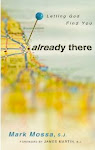
An Early Review of Already There

Karen in Mommyland has been kind enough to provide a review for Already There. Here's a taste of it:
"I liked how incredibly readable the book was. While reading Already There I just got the feeling that I was hanging out with a good friend. It's engaging, it's interesting, it's humorous and it has the ability to be life changing."
Read the whole review here.
I am grateful.
3 Favorite Prayers
Becky has asked me to share 3 of my favorite prayers with you, as she has also done on her blog.
So, here goes:
1 Lord, Save me! --St. Peter
2 The Anima Christi
Soul of Christ, sanctify me.
Body of Christ, save me.
Blood of Christ, inebriate me.
Water from the side of Christ, wash me.
Passion of Christ, strengthen me.
O good Jesus, hear me;
Within thy wounds hide me;
Suffer me not to be separated from thee;
From the malignant enemy defend me;
In the hour of my death call me,
And bid me come to thee,
That with thy saints I may praise thee,
Forever and ever. Amen.
3 Jeremiah's Lament
You duped me, O LORD, and I let myself be duped;
you were too strong for me, and you triumphed.
All the day I am an object of laughter; everyone mocks me.
Whenever I speak, I must cry out, violence and outrage is my message;
The word of the LORD has brought me derision and reproach all the day.
I say to myself, I will not mention him. I will speak in his name no more.
But then it becomes like fire burning in my heart, imprisoned in my bones;
I grow weary holding it in, I cannot endure it.
But the LORD is with me, like a mighty champion…
Sing to the LORD, praise the LORD,
for he has rescued the life of the poor from the power of the wicked!
Jeremiah 20:7-13
Amen.
So, here goes:
1 Lord, Save me! --St. Peter
2 The Anima Christi
Soul of Christ, sanctify me.
Body of Christ, save me.
Blood of Christ, inebriate me.
Water from the side of Christ, wash me.
Passion of Christ, strengthen me.
O good Jesus, hear me;
Within thy wounds hide me;
Suffer me not to be separated from thee;
From the malignant enemy defend me;
In the hour of my death call me,
And bid me come to thee,
That with thy saints I may praise thee,
Forever and ever. Amen.
3 Jeremiah's Lament
You duped me, O LORD, and I let myself be duped;
you were too strong for me, and you triumphed.
All the day I am an object of laughter; everyone mocks me.
Whenever I speak, I must cry out, violence and outrage is my message;
The word of the LORD has brought me derision and reproach all the day.
I say to myself, I will not mention him. I will speak in his name no more.
But then it becomes like fire burning in my heart, imprisoned in my bones;
I grow weary holding it in, I cannot endure it.
But the LORD is with me, like a mighty champion…
Sing to the LORD, praise the LORD,
for he has rescued the life of the poor from the power of the wicked!
Jeremiah 20:7-13
Amen.
Tuesday, August 10, 2010
On Retreat
I'm off today for my annual 8-day silent retreat, giving thanks for the wonderful young adult retreat we had this past weekend in Atlanta.
Prayers appreciated.
Peace,
Fr. Mark
Prayers appreciated.
Peace,
Fr. Mark
Tuesday, August 3, 2010
Not Quite Michael Clayton

This year, in addition to the various other things I was doing, I gave a bit of my time to help in the work of NJCIR (The National Jesuit Committee on Investment Responsibility). The NJCIR invests in different corporations and then, as stockholders, meets with leaders of those corporations to discuss social justice concerns. I wasn't sure what to expect when I agreed to do the job. But it involved attending a couple of meetings with a corporation in White Plains, NY. Together with some NJCIR regulars and some representatives of partner organizations, we sat down at a table and made our concerns known. I wrote a short reflection on my experience for the NJCIR annual report. Here's some of what I had to say:
As we sat down to our meeting with the agribusiness company, Bunge corporation, there were visions of the film Michael Clayton dancing through my head. Yet, thankfully, the only coincidence was the type of corporation we were dealing with. Tilda Swinton’s ruthless corporate villain was not sitting at the table with us. Instead, there was a rather amiable cast of characters, each willing to listen to our concerns . . .
. . . I always thought that if I were advocating for such things, I’d be living beside the poor in a third world country, not sitting at a corporate conference table in White Plains, NY. Our corporate responsibility efforts are certainly less visible and less romantic than advocating for refugees on the borders of Africa, but no less important. But in the midst of doctoral studies and teaching at Fordham University, it is nice to know that 90 minutes of my time, and a train ride to White Plains can make a contribution to human rights and environmental justice in other parts of the world.
You can find out more about the NJCIR, and read the entirety of my reflection in its annual report, which can be found here.
Saturday, July 31, 2010
Happy Feast of Saint Ignatius!

Today is the Feast of Saint Ignatius of Loyola, founder of the Jesuits. It is a day when Jesuits around the world gather for a special celebration. In New Orleans, where my Jesuit province is based, we honor today the men who are celebrating various jubilees as Jesuits and priests. This includes men who are celebrating 25 to 70 years of ministry as Jesuits. We thank God for their dedicated and continuing service to the people of God. You can learn more about our jubilarians here.
I will not be able to join them today. But part of being a worldwide Society means that we often gather with the local community wherever we find ourselves on this day. Today, another Jesuit from my province and myself will be joining our brothers in Belgium to celebrate the Founder's Feast!
A while back, I wrote a series of reflections on Ignatius' life. The first one talks about the scene depicted in the left hand panel of the above photo of the sanctuary of Ignatius Loyola church in Manhattan. It's the battle in Pamplona, during which Ignatius is injured. It proved to be an injury that would change his life and, eventually, the lives of countless others.
A recent article describes Ignatius Loyola Church:
"The curved apse presents three main events in the life of St. Ignatius. These huge murals of colorful Venetian glass mosaics resemble Renaissance paintings and are by the same company that crafted the Stations of the Cross. The scenes show Ignatius wounded in the battle that prompted his conversion, kneeling before Pope Paul III in 1540 to get approval for his new order, and receiving acclamation in heaven at his canonization."
Read the rest of the article here.
Happy Feast!
Monday, July 26, 2010
The Comment Box is Open
The blog has been going for about two years without comments. I do get some feedback when the posts feed to Facebook, but I do miss some of the back and forth of my old blogging days (but not the meanness). So, I've set the new posts to be open for moderated comments.
Comments are also open at the companion blog for Already There--Spoiler Alert--where I will be posting as well.
I look forward to reading what you have to say!
Comments are also open at the companion blog for Already There--Spoiler Alert--where I will be posting as well.
I look forward to reading what you have to say!
Sunday, July 25, 2010
Saint Ignatius' Advice for E-Mailers & Bloggers

Well, not exactly . . .
I've been reading Saint Ignatius' letters for a project I'm working on, and it struck me today that his guidelines for Jesuits writing letters back and forth--and making distinctions between what should be public and what private--are well applicable to electronic correspondence today. Once again, Ignatius seems a bit ahead of his time. He writes (to Pierre Favre, a.k.a. Peter Faber):
"I will describe what I myself do and, I trust in the Lord, will continue doing in this regard so as to avoid mistakes when writing to members of the Society [of Jesus]. I make a first draft of the main letter, reporting things that will be edifying; then, after reading it over and correcting it, keeping in mind that it is going to be read by everybody, I write or have someone write it out a second time. For we must give even more thought to what we write than to what we say. Writing is permanent and gives lasting witness; we cannot mend or reinterpret it as easily as we can our speech. And even with all this I am sure I make many mistakes, and fear doing so in the future. I leave for the separate pages other details that are inappropriate for the main letter or lacking in edification. These pages each one can write hastily 'out of the overflow of the heart,' with or without careful organization. But this may not be tolerated in the main letter: it must be composed carefully and edifyingly, so that it can be shown around and give edification."
Saint Ignatius was the most prolific letter writer of his time. So, he knew a thing or two about writing letters. And his advice is well-taken for those of us too whose writing "gives permanent and lasting witness."
Friday, July 23, 2010
Vocation Crises
I'm as concerned about increasing vocations to the priesthood and the religious life as much as the next person. I try to do my part to encourage those who are discerning such a life, and get involved in the Jesuit efforts at inviting others to share our life as much as possible. I want people to have the joy of living the life that I have the privilege of having been invited to. I also know that this life isn't for everybody. But I am convinced that there is a life that is for everybody--a life lived in relationship with God.
So, when I think of a "vocation crisis" these days (and I think I have even a greater awareness of it when I'm in Europe, as I am now), I think more of the fact that it seems that fewer young people are even making a choice to live a life that involves God. I meet lots of young people who are dedicated to a sort of humanism (for lack of a better word), but whom are indifferent to the question of God's presence or influence in their lives. Yet, how can you fault many of them who are doing generous and even heroic work for others in need? And how can you can convince them that they need God, when many of them are living much better and more virtuous lives than many who do claim a relationship with God or Jesus? If we believe our theology--"the desire for God is written in the human heart"--it seems that we could appeal to some sense that they have that they are missing something. But what if they don't? Christians as committed as Dietrich Bonhoeffer, who died for his faith in God, have questioned whether we really do have this innate desire for God. Of course, he did it in the context of profound evil. Yet, there are many today who are working to help others in similar situations of evil, in may different parts of the world. Many of them are not motivated by God or any religious impulse. Or are they, and they just don't know it? In the context of today's greater social and cultural awareness, this appears a very arrogant thing to say. I want to believe it is true but, like Bonhoeffer, I am starting to have some doubts.
Given these realities, I'm starting to think about how we as Christians might address what seems the real vocation crisis that lies at the heart of all the others. How do we convince people that having a relationship with God is important, when they seem to be getting along well enough without it? Often at times of crisis people seem to be more aware of this need. But does that mean that we have to wait until we can be crisis counselors? That doesn't seem to be the right answer. And while we could set about manufacturing a crisis for somebody, I'm uncomfortable with the moral implications of this strategy. In my own case, I hope that people would see that my relationship with God is the thing that drives my life, but often enough this doesn't seem to register with those for whom God is not on their radar screen. Even the natural or even skeptical questions I might expect (and welcome) are never asked. Yet there has to be some way to break through this all.
I have friends who consider themselves non-religious. Yet, they have spiritual inclinations that help me see God seeping into some of their cracks. But it's a slow process. But maybe there is also something of an answer in it. It may be that for many it just takes a long time for God to break through. But I'm going to keep thinking about how I might be able to help.
So, when I think of a "vocation crisis" these days (and I think I have even a greater awareness of it when I'm in Europe, as I am now), I think more of the fact that it seems that fewer young people are even making a choice to live a life that involves God. I meet lots of young people who are dedicated to a sort of humanism (for lack of a better word), but whom are indifferent to the question of God's presence or influence in their lives. Yet, how can you fault many of them who are doing generous and even heroic work for others in need? And how can you can convince them that they need God, when many of them are living much better and more virtuous lives than many who do claim a relationship with God or Jesus? If we believe our theology--"the desire for God is written in the human heart"--it seems that we could appeal to some sense that they have that they are missing something. But what if they don't? Christians as committed as Dietrich Bonhoeffer, who died for his faith in God, have questioned whether we really do have this innate desire for God. Of course, he did it in the context of profound evil. Yet, there are many today who are working to help others in similar situations of evil, in may different parts of the world. Many of them are not motivated by God or any religious impulse. Or are they, and they just don't know it? In the context of today's greater social and cultural awareness, this appears a very arrogant thing to say. I want to believe it is true but, like Bonhoeffer, I am starting to have some doubts.
Given these realities, I'm starting to think about how we as Christians might address what seems the real vocation crisis that lies at the heart of all the others. How do we convince people that having a relationship with God is important, when they seem to be getting along well enough without it? Often at times of crisis people seem to be more aware of this need. But does that mean that we have to wait until we can be crisis counselors? That doesn't seem to be the right answer. And while we could set about manufacturing a crisis for somebody, I'm uncomfortable with the moral implications of this strategy. In my own case, I hope that people would see that my relationship with God is the thing that drives my life, but often enough this doesn't seem to register with those for whom God is not on their radar screen. Even the natural or even skeptical questions I might expect (and welcome) are never asked. Yet there has to be some way to break through this all.
I have friends who consider themselves non-religious. Yet, they have spiritual inclinations that help me see God seeping into some of their cracks. But it's a slow process. But maybe there is also something of an answer in it. It may be that for many it just takes a long time for God to break through. But I'm going to keep thinking about how I might be able to help.
Friday, July 16, 2010
Summer Spirituality: Free Samples!


Looking for a new spiritual reading this summer? Saint Anthony Messenger Press is offering free samples of several new books (including my own) here.

Tuesday, July 13, 2010
My Books Are Trapped in New York. Send Photos!
OK. Since y'all will be seeing my book before I do, let's make this fun at least. Send me your most creative photo of you with a copy of my book in hand, feet, on head, etc. I also wouldn't mind seeing a shot of the back cover. My favorite photo submission gets a prize, to be negotiated. Send to markmossasj@yahoo.com
I'll collect the photos and add a link to them on the book's webpage. If you'd rather your photo not be included there, just let me know.
Thanks.
I'll collect the photos and add a link to them on the book's webpage. If you'd rather your photo not be included there, just let me know.
Thanks.
Sunday, July 11, 2010
"Spiritual, but not Religious." Is It Really So Wrong?
It's become pretty commonplace these days to criticize those who claim to be "spiritual, but not religious." Invoking Saint Ignatius and Soren Kierkegaard in this excerpt from my just released book, Already There, I suggest that maybe we shouldn't be so quick to judge. It might not be the whole deal, but might we consider they may be onto something?:
"Saint Ignatius is not the only one to have such experiences. All of us can fall into the temptation of doing religious things instead of finding out what God wants us to do with our lives. People that claim to be 'spiritual but not religious,' then, are onto something. But it’s not that the spiritual life is a replacement for religion. Rather, it’s that religious practice absent reflection on one’s gifts and talents, one’s interior life and relationship with God, one’s past, present, and future in light of God’s love and God’s will is hollow, no matter how sincere. It’s far easier to go through the motions of religious practices than it is to do the hard work of looking at your life and discovering in it what God is inviting you to do with that life. And, indeed, it is hard because many of us can’t imagine that God would be so concerned with our individual lives. The famous Christian philosopher, Søren Kierkegaard, once described our relationship with God as follows:
'[T]his human being exists before God, may speak with God anytime he wants to, assured of being heard by him—in short, this person is invited to live on the most intimate terms with God! Furthermore, for this person’s sake, also for this very person’s sake, God comes to the world, allows himself to be born, to suffer, to die, and this suffering God—he almost implores and beseeches this person to accept the help that is offered to him! Truly, if there is anything to lose one’s mind over this is it!'”
Tell me what you think here. Comments are open.
"Saint Ignatius is not the only one to have such experiences. All of us can fall into the temptation of doing religious things instead of finding out what God wants us to do with our lives. People that claim to be 'spiritual but not religious,' then, are onto something. But it’s not that the spiritual life is a replacement for religion. Rather, it’s that religious practice absent reflection on one’s gifts and talents, one’s interior life and relationship with God, one’s past, present, and future in light of God’s love and God’s will is hollow, no matter how sincere. It’s far easier to go through the motions of religious practices than it is to do the hard work of looking at your life and discovering in it what God is inviting you to do with that life. And, indeed, it is hard because many of us can’t imagine that God would be so concerned with our individual lives. The famous Christian philosopher, Søren Kierkegaard, once described our relationship with God as follows:
'[T]his human being exists before God, may speak with God anytime he wants to, assured of being heard by him—in short, this person is invited to live on the most intimate terms with God! Furthermore, for this person’s sake, also for this very person’s sake, God comes to the world, allows himself to be born, to suffer, to die, and this suffering God—he almost implores and beseeches this person to accept the help that is offered to him! Truly, if there is anything to lose one’s mind over this is it!'”
Tell me what you think here. Comments are open.
Friday, July 9, 2010
On Being At Home, Part 2: The Reason I'm a "Southern" Jesuit

“South Carolina” is the answer to the question I’m often asked: How did I guy from Massachusetts end up a Jesuit in the New Orleans Province? The summer after I graduated college I worked at a summer camp in Western Massachusetts, where I worked with several young women from South Carolina. I think they were the first people from there I’d ever met. There was something about them, and how they spoke about the place that fascinated me. So, later that year, when I was applying to graduate schools, the rather strange possibility of applying to the University of South Carolina seemed a little less strange.
I know it might seem funny, but my decision to apply to USC was influenced by what might otherwise have been an overlooked “personal touch.” I was applying to grad schools from out of the country, and didn’t have a fixed address. The newest information catalogue was not available, but instead of sending me a form letter, or not responding at all, someone had taken the time to write me a personal note asking me to let them know what address to send the information to me, when it became available. Still, as the acceptance—and rejection—letters came in, my best offer was from Catholic University in Washington, and it seemed I was going there. But, I thought, I had nothing to lose in writing the other places I had been accepted, and seeing if they had something more to offer. I got only one bite. USC offered me a teaching assistantship, which was exactly what I was looking for.
So, South Carolina became the first place that I lived on my own, far away from home. My first friends were the other students in the program, many of whom I liked very much. But I also felt the pull of my spiritual roots, and started getting involved at the Saint Thomas More Catholic Student Center. There I met several friends who, though now we’re scattered all over the country, I still keep in touch with. I also felt another pull back to youth ministry, which led me to a local parish, and a deep, abiding friendship with a group of people who continue to be some of my closest friends. And, because they were “locals,” many of them having grown up in South Carolina, and because they continue to live there, which (sadly) I don’t, South Carolina is a special kind of home, which I try to get back to with some regularity. I write about my experience in South Carolina in my book, Already There:
"I enjoyed my activities at the university’s Catholic center, but I also felt God stirring that desire to give retreats to or teach high school students,as I had done in the past. I arranged a meeting with the youth ministry director in the parish. Remarkably, she already had six people who had volunteered to help that year. I was excited by the prospect of working with such a large team. She, on the other hand, as she admitted to me only some months later after we’d become close friends, had been prepared to suggest I try another parish, since they already had more help than they needed. But we hit it off almost immediately, and when I told her about my desire and my past experience, she couldn’t say no. A few years later, she was one of the first people I told of my decision to apply to become a Jesuit, and the first I asked to write a recommendation for me.
The result was a dream team of sorts. We eight became fast friends and quickly discovered how well our skills complemented one another’s in our work with the parish’s youth. The youth program not only grew and improved, but so did we, because of our care for the young people of the parish and each other. The total impact on my life seems disproportionate to the amount of time it lasted—only about two years. It was an experience of friendship and community I continue to cherish, I’ve carried the picture of the eight of us in all my moves since then, even though that experience could not be sustained. One man was in the army and was transferred, one woman got married and moved to another state, one could no longer find the time, and two of us felt called to answer the need for a youth ministry director at another parish.
Such times, such friends, are great gifts, even if, inevitably they can’t be beside us forever, let alone a few years. By drawing out the best from us, they directly contribute to our becoming what God desires us to be. These were, and continue to be, some of the best and most important friends I’ve had in my lifetime. When I was ordained a priest in New Orleans, after celebrating Mass with friends and family, my next stop was South Carolina. I needed to be with my friends there because, though I had gotten my training from the Jesuits, these were the people who had inspired and nurtured my gifts and my desires in such a way that being a Jesuit and a priest became a real option for me. There’s little coincidence in my mind in the fact that four of them were with me that day, listening to the same priest talk, when God placed the question in my mind, “Why aren’t you doing that?” In our work together, and in our care and love for each other, they had already, in a sense, asked me the same question."
Wednesday, June 16, 2010
Spiderman, Barack Obama & Me

A friend pointed out something to me the other day that is quite funny. If you search my name on Amazon.com, you get four results: my two books, my author page and an issue of the Spiderman comic featuring Spiderman and Barack Obama on the cover. I have no connection with this particular comic book (or any comic book, for that matter), but I do find it funny that this should come up. Though the explanation seems little more than that there are two people involved with the comic, one named "Mark" and the other named "Mossa," it still seems in some ways apropos. Though I was never avid comic book reader or collector, I have always been fascinated with superheroes. Certainly it must go along with my interest in sci-fi and fantasy (which is about all I read when I was a kid), but I've always been fascinated by stories of people with special powers, or those who make the most of what they have. When I was just beginning to read, I loved also to read stories about strange phenomena like the Bermuda triangle or Easter island. It was about that same time when my best friend and I would play "Batman & Robin," plotting strategies against our evil enemy--his older sister.
Thus, all my life I have believed that we are capable of doing more than we think we can, even what some insist might be "impossible." That is why, as a Christian, though I often let fear get in the way, I have always taken Jesus at his word when he said that we can do greater things than we think ourselves capable of, even greater things than he! I have found this to be true, not necessarily in dramatic "superhero" type ways, but often in simple ways. For me, this is apparent in moments in ministry when I find myself doing things that I thought I'd never do, overcoming anxiety to enter into someone else's pain to the extent that in some way I can feel it too, or saying or doing just the right thing, and later wondering and being amazed knowing that "just right" thing came from somewhere beyond me. I could not have come up with that on my own. I could not have done that, without God.
As far as Barack Obama, I don't really have much to say. And, unfortunately these days, you can't mention a political figure without sparking a firestorm of contempt or even hate in some people. But one can hardly deny that simply by being elected president, he accomplished something many thought to be impossible. To get there, he too had to get to a moment when he thought the "impossible" possible. This was a key moment for me in my discernment to become a priest. Some priests, perhaps, knew they could do it long before they actually did. For me, it took a while before I got to a point where I thought, "you know, I just might be able to do this," and it wasn't until I got there that I was able to apply to the Jesuits, and get started in the process. That was about 15 years ago, and I celebrated two years as a priest, just this week. Not only has it proven to be possible, but it seems like I've been doing it much longer than that!
It doesn't take the bite of a genetically altered super-spider for us to do amazing things. Jesus said with just a little faith, we can do the impossible. What impossible things have you done lately? Or what might you be being called to do?
Subscribe to:
Posts (Atom)