Wednesday, May 19, 2010
Big Think: Fr. James Martin
A good interview with Fr. James Martin, SJ on being a Jesuit, Priest and Catholic today:

Friday, May 14, 2010
The Annoyed Man in White
So, OK, maybe I shouldn't have preached about those "annoying men in white," but I was advised to keep it short, and was hoping to get people's attention. That I did (or didn't), but not exactly in the way I'd hoped.
Back in the days when I was an altar boy, I used to find it a bit shocking that the priest could get angry about what did (or didn't) happen at Mass. Priests weren't supposed to get angry. I was reminded of this, because I almost lost it yesterday. The new lavalier microphone wasn't switching on and off properly. I had to keep pulling it out to check it, because the switch was jamming and then, even still, it didn't seem to be working right. So, the congregation, and the web audience, were only able to hear some of that part of the mass. This was distracting enough.
Add to that that twice in the course of the mass, I was informed that we were going to do this, instead of that (presumably because of the significant number of latecomers arriving). This largely involved Communion, so suddenly the altar was crowded with vessels that weren't originally supposed to be there, leaving me to have to try to organize the mess in some way. And did I mention that I was told before the mass that they wanted to finish in about 35 minutes?! Pressure, distraction and disruption made it very hard to celebrate the Ascension. Instead, I was frustrated and angry. It took a grand effort not to shout at the liturgy coordinator after mass. Instead, after making the strong effort to pleasantly greet people as they left, I more or less just got out of there, and tried to collect myself.
Up there with those "annoying men in white," was one annoyed man in white. Me.
These days I understand better why, when I was a young altar boy, Father wasn't always perfect, and sometimes not even nice.
Thursday, May 13, 2010
Those Annoying Men in White
A brief reflection for the Feast of the Ascension:
You’ve no doubt heard of the “Men in Black,” that elite team that saves the world from aliens. But in today’s readings we hear not from them, but from the men in white, or as the beginning of the chapter from where today’s Gospel reading is taken has it, the men in “dazzling garments.” The men in white ask annoying questions. In the last chapter of Luke, they ask the shocked women who have arrived to find Jesus’ tomb empty, “Why do you seek the living among the dead?” In the first chapter of the book of Acts, also thought to have been written by Luke, they appear again, just after the Apostles have watched Jesus ascend into the sky in a cloud, asking, “Why are you standing there looking at the sky?” As if it wasn’t obvious!
As annoying as these questions seem, they also serve as a challenge to the people to whom they are posed. Yes, you have just seen something amazing, they seem to be saying, but it’s not like you weren’t told to expect this. So, don’t just stand there, you’ve got work to do!
They—and we—are being reminded of what our second reading today also seeks to remind us, “Let us hold unwaveringly to our confession that gives us hope, for Jesus, who made the promise is trustworthy.” In these days after our celebration of Easter we have been holding on to this hope given us by Jesus’ resurrection. Today, in the Ascension of Jesus, we are invited to take a step further, to trust that in the gift of the Holy Spirit, given after Jesus’ ascension, God was and continues to be with us. And when we see God’s Spirit active in our lives, as we all can if we just look into the faces of our family and friends and at the things that we’re thankful for, we should stand in awe and wonder. But not for too long. Otherwise, those men in white will come along, with their annoying questions, reminding us, “Don’t just stand their twiddling your thumbs.” Now that you’ve seen God’s spirit working in your life. Now that you know that Jesus has kept his promises. It’s time to get out there and share this with everybody else!
Friday, May 7, 2010
Edited Out
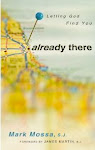
I've spent a good part of the last week looking over the initial galley proof pages of my forthcoming book Already There: Letting God Find You, which now even has it's own Library of Congress catalogue number! It's exciting to start to see what the book will actually look like! But the process is a little bit like an emotional roller coaster! This is the first chance to see the edited version. And, of course, I realized that I have NO objectivity with regard to what has been changed or left out from my original manuscript. Has my voice been taken away? How could the editor change that! That doesn't even sound like me! Then, of course, you look back at the original manuscript, which you haven't read in a while (it was finished almost a year ago at this point), and you realize about some of these things--Oh, I did write that. Then you feel embarrassed, and a little guilty for those thoughts you had (briefly, of course) about your editor. But realizing my lack of objectivity, I sought the aid of my friend who knows my writing well, and who is also not afraid to be brutally honest, if necessary. We sat in a diner yesterday, and went through the pages together. She commiserated with me over some of the changes, pointed out a few things she didn't like, but also kept repeating, this is really good. That's what I really needed her for, and needed to hear. I just needed somebody to read it and tell me it would be OK--even more than OK.
I keep trying to remind myself that the book is not for me. It's for the young adults for whom I wrote it. So long as it speaks to them, and helps them, it doesn't really matter if one of my favorite parts is missing. That, of course, doesn't mean I didn't do my share of saying things like, "we really need to do this." But I was also able to let several things go. It also helped that a certain writer friend of mine told me of his best-selling book, "my editor took out some of my funny stories. And it probably made it better." So, I can breathe. Especially since, as of this morning, the corrections are in the mail!
Looking forward to seeing how it's all going to turn out. But the neuroses are not over yet. I'm still terrified that I'm going to hate the cover when I finally see it! But I'm asking God for patience, trust, and humility. All will be well. Repeat.
Sunday, May 2, 2010
V's Father Jack

I've been watching the show "V." It intrigues me, though I can't say I'm a huge fan. But one of the things that is most interesting and novel about it is that one of its main characters is a priest. Unfortunately, while they try to make the character interesting, he's more of a cliche than anything else. Not to mention a bit unrealistic.
Now, I know what you're thinking. "C'mon, Father, it's scifi--it's not meant to be realistic!" Sure. But it can't be totally ridiculous either. For example, how does Father Jack take care of his pastoral duties, when he seems to be spending all his time being an insurgent against the Vs? The occasional scene of him holding a rosary doesn't quite do the trick. True, he does serve as the conscience of the group sometimes, but the character needs to be filled out!
And I have to mention the most ridiculous thing of all. One can only conclude from his wardrobe, that he's not very bright. If I were engaging in subversive activities, like he and his rebel group are, you can be sure I wouldn't be wearing my collar all the time, like he does! Just think of the report from the witnesses to an attack by the insurgent group: "I didn't get a good look at them, but one of them was a priest." That narrows down the list of suspects quite a bit. You can imagine someone asking the obvious question: "What kind of idiot wears a Roman collar to a bombing?" Indeed. Father Jack needs to wise up, instead of just getting weepy-eyed every time they come up against a morally questionable situation.
But here's where the V producers could really do something interesting, which they haven't. So far, really, it doesn't matter that he's a priest. He could just as well have been a social worker. What they need to do is make the fact that he's a priest mean something. For example, wouldn't the arrival of aliens sort of rock the world of many people who are deeply religious? Shouldn't he be questioning how this fits in with his faith in God? Since they have a priest character, they ought to take advantage of the opportunity to explore the theological issues involved. For example, might he be wondering about the status of the Vs within his theological worldview? And what about the V-human baby, can and should it be baptized? What are the implications of his involvement in the fight against the Vs for his priesthood? Might it mean that he might have to take time off from being a priest? Should he have a spiritual director/friend of some sort with whim he an take up such questions?
I guess part of my frustration is that priest-characters usually come off one way or another. They are either one-dimensional, or being lured away from their vows. Refreshingly, so far it is not the latter, but the character needs some help. Father Jack needs to be more a priest, and less the weepy-eyed conscience figure. And for God's sake, Father Jack, if you find yourself bringing a gun along somewhere, lose the clerics! You could bring down the whole resistance by being so identifiable.
And while we're on that subject, why hasn't the savvy terrorist they've recruited to help them told Father Jack this already??!! You'd think he would have realized the problem from day 1, mate.
Tuesday, April 27, 2010
Fr. Walter Ciszek, Pray For Us

Sorry I've gone so quiet. The last three weeks have been non-stop work! Hope to have something new, soon. In the meantime, get to know one of my favorite Jesuits, Fr. Walter Ciszek. His cause for sainthood is being promoted.
The Priest Who Died Three Times
BY: LOUISE PERROTTA
The first time Walter Ciszek "died" was in 1947. The American Jesuit had disappeared in 1940, shortly after slipping into Communist Russia to work as an underground priest. After seven years, his family and religious community gave him up for dead.
But the priest had been arrested on charges of espionage, and swallowed up into the Soviet prison system. Not until 1955, when Fr. Ciszek got a letter to his sister in Pennsylvania, did anyone outside the Iron Curtain suspect he was alive. When he was sent back to the United States in 1963—traded for two Russian agents—it seemed like a return from the dead.
Ciszek died for real on December 8, 1984, at age eighty, two decades after being released. But in between these two demises, he underwent a death—and a resurrection—of quite another sort. . .
read the rest here.
Thursday, April 8, 2010
Young Women & Catholicism

Tonight at Fordham I'm helping to host an event on how young women experience being Catholic. For the event, we've invited Jen Owens and Kate Dugan, the editors of From the Pews in the Back: Young Women & Catholicism, to come and speak about their collection of essays from young Catholic women. We've also invited some undergraduate women here at Fordham to speak about their own experience. If you're in the New York area, come join us tonight, from 5:30-7:00, at Fordham University in the Bronx at Tognino Hall, located in the Duane Library. You might remember my post from about a year ago, which spoke to the issue of women in the Church. I'll add that when I shared this experience with an older Jesuit priest, whom I knew was sympathetic to my concerns, his response was "get used to it." But do we really have to get used to it? That is among the questions we'll explore tonight. I'm looking forward to it!
Friday, April 2, 2010
Could We Be Heroes?

The other day an older Jesuit, who has been working at one of our high schools for decades, asked me, “why would an 18-year old boy want to be a Catholic?” “Who are his role models?”
It was, admittedly, not so easy to come up with an answer. You could answer by pointing to Mother Teresa, or John Paul II, perhaps. But you immediately run into certain problems, even with these figures. In America, at least, we face something of a crisis. Our Catholic heroes are not idolized, instead we have allowed them to become “ideologicalized.”
Take John Paul II. “Conservative” Catholics have claimed him, and “liberal” Catholics have given in. Forget that along with his traditional ecclesiology, he also insisted upon the preferential option for the poor. Forget that in addition to his strong stance against abortion and euthanasia, he also closed the door on most, if not all, Catholic justification of the death penalty, was a passionate promoter of non-violence and consistently spoke out against war throughout his pontificate. Conservatives have claimed the parts of him which fit their agenda, and liberals have allowed it by doing such things as calling more traditional young priests whom they disapprove of as “JPII priests,” or the JPII generation.”
This conversation brought home to me what I knew intuitively, but hadn’t realized so starkly up until this point. We have given up on “Catholic” heroes, and have made heroes of Catholics who fit into nice, little, ideological boxes. Gone are the days when a Thomas Merton, Dorothy Day or Fulton Sheen could be looked up to by most Catholics. Today, conservative Catholics would object to Dorothy Day for being a pacifist, and accuse her (as Glen Beck did just recently) of being a Communist (true, some did back then, too). Merton would be looked on with suspicion because of his interest in Eastern religion. And Fulton Sheen would make liberals uncomfortable because of his extreme concern with Communism perhaps, but even more so because he was a member of the hierarchy.
Can one be a Catholic hero in America today without being claimed by one of these ideological camps? Or maligned by one? It seems like any would be Catholic hero has to be a conservative hero or a liberal hero, neither of whom turns out in the end—at least according to my understanding of what it means to be Catholic—to be a very Catholic hero. The greatest Catholic heroes, the Saints, have never been those that could be easily fit into these little boxes. They are saints precisely because of their expansiveness and broad appeal. Some of them, indeed, were persecuted—even killed—by the Church. And the Church in her wisdom recognized her mistake by proclaiming their sanctity. This in itself might give us pause before we are so quick to condemn those we deem insufficiently Catholic.
And what are the consequences for young people today? They see a version of Church that speaks of intolerance and exclusion, one in which one could not possibly be a hero without holding all the correct opinions and participating in the right youth group, club or political party. This is a church which becomes more and more distant from their experience as members of a society which while certainly imperfect, at least makes an effort at being tolerant of difference, and recognizing the worth of all. I was once naïve enough (and I still hope that younger people today might fight to hold on to such naivete) to believe that this ideal, however unrealized, was mirrored in the pro-life movement of the Church. After all, aren’t we as Catholics devoted to affirming the dignity and sacredness of all human life? I thought so when, as a youth, I became involved in pro-life activities. But quickly I realized that many of those whom I prayed or protested with against abortion, the death penalty, war, etc. were really only dedicated to the dignity and sacredness of some human life. And they frequently showed little regard for the dignity of those who didn’t agree with their particular form of extremism (even some who were on “their side”). There were no heroes for me there. Heck, I didn’t even want to be around most of them, except for the minority which were the most humble and sincere, and who persevered despite being embarrassed by many of the more vocal members of the group.
This was my experience as a young adult, and I fear it’s only gotten worse. When I ask my students if as Catholics they feel a strong pull, as I did at their age, to become associated with one camp or another, they say the tendency among them and their Catholic peers is to simply become apathetic about the Church. They may not even have a strong idea of what it means to be Catholic, but still they can see the lie in many of the ways of being Catholic that they are being offered. They are still idealistic enough to believe that being Catholic means loving each other, and too often that is something that many of those being offered as heroes to them don’t seem too concerned about.
As that becomes increasingly the case, that question asked by that older Jesuit seems far less cynical than it seemed on first hearing, and far more urgent.
Saturday, March 13, 2010
CGI Jesus in 3-D

I thought I'd share with you the homily referenced in the previous post:
Today’s readings contain two dramatic and epic moments which, if adapted into a movie might require the talents of a director like James Cameron, Ridley Scott or Peter Jackson. They are moments that while foreign to us, might not seem out of place in, say, the Middlearth of The Lord of the Rings.
While care would have to be taken to make sure no animals were really harmed in the filming of the encounter between God and Abram from the first reading, just imagine what it would be like to see that giant smoldering pot and the flaming torch floating through the air toward a disoriented and hypnotized Abram, a testament to God’s friendship with him and his descendants. Abram could not but fall on his knees in awe of such a display.
Or imagine putting on your 3-D glasses and watching as the CGI Jesus bursts into a figure of dazzling white light, and settles into a conversation with an equally dazzling Moses and Elijah. Like Peter, awakened to this spectacle, your reaction, like his suggestion of the building of tents, might very well appear unequal to the moment. How do you respond to something the likes of which you’ve never seen before? And, then, even as you realize Jesus’ puzzlement at your babbling, large, menacing clouds start to fill the sky, and with them comes a voice, demanding your attention, proclaiming of this newly revealed Jesus, “This is my chosen Son. Listen to him.” And then, suddenly, as if it were all a dream, everything looks as it did when you first arrived.
As you take off your 3-D glasses, and rise from your seat, you might ask in wonder, “Man, why can’t I have encounters with God like that?” Then, I would really know that God was a part of my life. That is, of course, if afterwards you didn’t convince yourself that it was all a hallucination or a dream.
But is this really what we would need to kickstart our relationship with God, or might it instead just scare the Jesus out of us?
For while such spectacles might wake us up, dazzle us and grab our attention, the real question is: can they keep it? Do they keep our attention?
Perhaps it is not the image of the fiery torch and pot from that first reading that is meant to stay with us. Maybe the more enduring image we’re meant to take away is the far more ordinary one of Abram gazing up at the sky, trying to count the stars. Haven’t we all at some time in our lives known the wonder of doing something more ordinary, like that? Of looking up in the starlit sky, or at the ocean, or even the wonder of things built by the inspiration of human imagination, and thinking that there is something more at work in the world than just molecules and us.
God shows Abram those stars to make him a promise about the future, and the future of his descendants, the same promise being made in the more dramatic episode to follow. Yet, that drama would have had no meaning if Abram hadn’t first looked to the stars and as a result, we are told, put his faith in the Lord. The pot and the torch are pretty impressive, but from now on, if Abram wants a reminder of God’s promises to him, he only needs to look up at the sky.
So, if you are waiting for that epic, Hollywood moment to really get you started in your life with God, you are probably in for a long, and frustrating, search. Epic moments like the Transfiguration of Jesus are few and far between. And they don’t come to many. Notice that only 3 of the 12 Apostles were even present for this one. And, honestly, billowing clouds and voices from the sky don’t speak so convincingly to us of God’s presence as do quiet moments in prayer, times of joy and sadness and the intimate moments that come when we care for each other.
Almost ten years ago I accompanied eleven Fordham students to Calcutta, India for two weeks. It was my first time there. I was, of course, struck by the poverty. I expected that we would find God in our work with Mother Teresa’ Missionaries of Charity. And certainly we did. But for me, God was made most present when I watched the students that were with me, as they took the time to feed those too weak to feed themselves, as they played with the children at the orphanage where many of them worked and in the attention they paid to the poor children we met on the street. I’ve seen few greater examples in my life of someone doing precisely what Jesus says in the Gospel as when one of our students literally took the shirt off his back, and gave it to a child who didn’t have one. It was an intimate expression of God’s care that wasn’t lost on me, even if, at the time, it didn’t even occur to him.
Now, of course, we don’t have to go all the way to Calcutta to see God working this way in our lives, and in the lives of others. But sometimes we do need a change of scenery, or at least a change in perspective to discover that we may have missed out on the fact that God was there with us, all along. I didn’t have to go all the way to India to see how powerfully God could work through the love and generosity of a Fordham student. It happens here everyday. Heck, when I wasn’t frightened for my life, I’ve even seen it on the Ram van. That’s right, I said it, you can find God on the Ram Van sometimes. And to see how many of you have come here to Church this Sunday night, dare I say that you might just be able to find God in that person sitting next to you, or behind you.
We’ll also get to see that in a special way here tonight as we commission those students who will be spending their Spring Break in various places around the country and the world getting that change of scenery and perspective which hopefully will help them to see God working in their lives and in the lives of others, especially in an encounter with those most in need of not just material things, but in simply knowing God’s presence with them in the love, and the care of other human beings. This is a fitting example for Lent, a time when we speak of “giving things up.” Some may not even realize it yet, but they may be giving up other things they could be doing for Spring Break for an experience that might change their lives in ways they never imagined. But even if you’re spending your break working, or going on vacation or, God forbid, doing homework, that doesn’t mean the opportunity is not there for you as well.
What these moments in the readings today are meant to represent to us is the fact that God finds all sorts of ways to be present in our lives, even ways that might strike as unusual. There are people like Cardinal Avery Dulles, who taught here for many years, whose lives were changed simply because one day he took the time to consider the beauty of a tree. There are others like Mother Teresa whose life was changed by stopping to help a man who was dying in the street. And there are others, like all of us, who can catch a glimpse of God by watching John the Fordham student take the shirt off his back, and give it to a child who didn’t have one. But most of the ways we encounter God would hardly make good Hollywood drama because they come to us in the everyday events and people of our lives, and we can’t imagine how often we once missed them when some change of scenery, or maybe just a new way of thinking causes us, like those 3-D glasses, to see things in a different way.
Thursday, March 11, 2010
You Just Never Know
I'm often left wondering after Mass whether the words of my homily had any impact. Often, I just have to leave it up to God. But, every once in a while someone gives you a glimpse. That's why I was pleased to read this is in this week's Fordham student newspaper (Note: the "ram van" is the regular shuttle which ferries students and faculty back and forth between our Bronx and Manhattan campuses):
Two Sundays ago, I attended my first Mass at Fordham, the 9 p.m. service at the University Church. As a member of GO! Nashville, I participated in the commissioning ceremony preceding Sunday Mass. Attending church was not mandatory, but I tagged along with my teammates. The decision to join my friends was made out of proximity; I was already in the basement, so why not sit upstairs for an hour? I never avoided church due to religious reasons, but because of immature procrastination and laziness.
I carried into that church with me every misguided misconception that an ignorant Protestant could believe. I thought the communion wafer was nothing more than a revered Ritz cracker and the sign of the cross an adaptation of the Hand Jive.
My lack of Catholic upbringing was on display throughout Mass, as I fumbled over the wording of prayers and disrupted the harmony of the hymns. Later, Father Mossa declared that God is present at Fordham, “even on the Ram Van,” applying Jesuit teachings to everyday situations across campus. Following the sermon, he directed the blessing of the GO! Teams. As I turned around to confront my peers, I saw the faces of my friends, classmates, and professors. The church was filled with Fordham’s diverse community, looking at me, arms outstretched, supporting my impending trip to Nashville. That night was not about the epic saga of Catholics versus Protestants: it was about community.
I left the church without a religious epiphany but with an appreciation for the church I so vehemently evaded. The sanctuary of that church assembled the most diverse collection of students I have yet to find at Fordham, a sense of community absent in my Fordham experience to that point. While there is no impending Catholic conversion in my future, I certainly will be back this Sunday.
You can read the whole article here.
Monday, March 8, 2010
With God in Russia

Fr. Anthony Corcoran, SJ is someone you should know about. He is a Jesuit of my province who went to work in Russia after being ordained a priest. He spent 11 years working in Siberia, and has some amazing stories about encountering the Church as it has survived, even during the time of the Soviet Union.
Last year, an as yet completely explained event happened in Moscow. The Jesuit regional superior for Russia, and another Jesuit were murdered. Fr. Tony was then asked to become the new regional superior of the Jesuits in Russia. The international Jesuit website has an interview with him, which you can access here.
He speaks about his work in Siberia, dealing with the grief and the legal issues associated with the murders, living now in Moscow and being superior of the Jesuits working in Russia.
Friday, March 5, 2010
sTALKING GOD
A while back I was listening to Death Cab for Cutie's song, "I will possess your heart." One of the verses goes like this: How I wish you could see the potential/The potential between you and me/Like a book elegantly bound/But in a language that you can't read, just yet . . .
The refrain continues: You've got to take some time, love/You've got to take some time, with me/And I know that you'll find, love/I will possess your heart.
In my typical fashion, I started to think what it might be like if God were saying this. What if we saw this as an invitation from God? From that perspective, it is quite a moving invitation. God is inviting us to something "elegant," even if we can't understand it, just yet.
Of course, if you go deeper, you become aware that this probably isn't what the song is really talking about. Indeed, it's most certainly meant to be the words of a man obsessed with a woman. From that perspective, things are a little different. In fact, it gets kind of creepy. This is the song of a stalker!
But, as strange as this suddenly becomes, I also find I quite like the image of God as someone who is stalking us, as someone who watches us lovingly, and longs to possess our heart. When it's God that has that depth of passion, it's pretty awesome! Even though, if it were anybody else, it would probably just be creepy.
But I think we are all God-stalked, and that we all long to hear God talk to us. But it may be in a language we can't read--just yet.
This blog is about what happens when we start to learn the language of GODsTALK.
Thursday, March 4, 2010
McPriesty

My friend, Jesuit priest and author Jim Martin, is the focus of a USA Today feature story. He speaks about something we have in common (besides being Jesuit priests), the interest in finding God in popular culture. He also talks about his new book:
He writes in The Jesuit Guide that "within the Christian tradition, all spiritualities, no matter what their origins, have the same focus — the desire for union with God, an emphasis on love and charity, and a belief in Jesus as the Son of God."
It's about making a God-centered life accessible to the doubtful as well as the devout, he says.
It's about realizing that when you are most vulnerable — sick, out of work, lonely, afraid, "God can move through your defenses, strengthen and accompany you."
And there's a radical simplicity to that, Martin says.
He says Ignatian spirituality "does not ask you to become a half-naked, twig-eating, cave-dwelling hermit. It simply invites you to live simply."
Gotta love that last line! Read the whole article here.
Changes of Title
No, you haven't landed on the wrong page.
I just thought it was time to retire as a "rookie priest." I'll continue to explore the new experiences of priesthood. Though I'm not quite a rookie anymore, I still have my share of "first time" experiences.
But I will also begin to explore more specifically the challenges and the consolations of being a "hyphenated priest." This is one of the things that drew me to religious life in the Society of Jesus. Jesuits tend to have dual identities or multiple identities which demand a good deal of their time. So, one is often a priest and . . .
In my case, at least for now, I'm a student-priest, a professor-priest and a writer-priest. These occupations are not peripheral to my priesthood but, rather, are transformed and enhanced by the fact that I'm a priest. My approach to teaching and my relationship with my students is different because I'm a Jesuit and a priest. Indeed, I think it makes me a better teacher. The lines get blurred a little when, because I'm a priest, a student shares something with me or asks my help with something as a priest. I have to switch identities, while also maintaining certain boundaries (the student needs to be aware that sharing his or her faith life with me, for example, is not going to improve his or her grade). But it's also a privilege to share more deeply in my students' lives.
In addition to my prayer experience, and my sacramental ministry as a priest, these are also the places where God stalks me and talks to me. And so I'll share how God finds me in both my experience as a priest, and in my "hyphenate" experiences.
Tuesday, February 23, 2010
Spanish Mass
On Wednesdays I go to a local parish and say their noon mass, in Spanish. I feel a certain obligation to offer mass in Spanish, because the Jesuits paid for me to learn the language so that I could use it in my ministry. But it is an exercise in humility. Despite the fact that many have told me that my accent and pronunciation of Spanish are quite good (for a gringo!), I have yet to get through a Spanish Mass in which I have pronounced everything right! No matter how much I practice, I always manage to trip over or mispronounce at least a few words. It's frustrating. I try to remind myself that I often do the same in English [!] (you can even catch hints of my Woostah accent sometimes), but I still want it to be perfect. I don't always have the time to have someone proofread my homily, so I also know that my grammar isn't always perfect, but they seem to understand the gist of things anyway (occasionally I get a puzzled look that makes me wonder). I never get any complaints, and the people appreciate me coming (and the pastor appreciates the time off).
What's more challenging is that sometimes the people ask for confession afterwards. This takes a bit more effort, because I don't always understand everything they are saying (and maybe that's why they ask!). But in some ways it's nice, because it forces me to be more attentive, and it also forces me to be more attuned to non-verbal cues.
And there's also this sweet older woman who sometimes comes. She'll grab me after mass, insist on giving me five dollars for lunch, and then talk my ear off! The only problem is that she has a very strong accent, and I can't understand half of what she's saying. I smile, nod my head a lot, and try to offer some response to those things that I do understand. There are some common themes I've culled over time, one of which is that she spends a lot of time praying for us priests. Which, it seems to me, means that I can spend a little bit of my time listening to her, even if I'm not sure what she's saying. She doesn't seem to mind.
I've yet to try the full Sunday Spanish mass, and will probably still wait a little while before jumping into that deep end. But I have done the bilingual mass, which I actually quite enjoy. The prayers are mostly in English, with some parts in Spanish, like the penitential rite (yo confieso ante Dios, y ante ustedes hermanos . . .). There's something really cool about writing and giving a homily in both Spanish and English, and doing it in such a way that I'm not just repeating the same thing, but giving people enough to go on in both languages.
Again, I don't get everything perfect. But it's all a good reminder that getting it perfect is not what it's really about, in whatever language.
Sunday, February 21, 2010
Temptation
Today's Gospel is about Jesus' temptation in the desert. As I was preparing my homily, it occurred to me that Tiger Woods' words on Friday were a good illustration of how temptation can sometimes lead to our ruin. So, I shared some of his words in my homily:
I knew my actions were wrong. But I convinced myself that normal rules didn't apply. I never thought about who I was hurting. Instead, I thought only about myself. I ran straight through the boundaries that a married couple should live by. I thought I could get away with whatever I wanted to. I felt that I had worked hard my entire life and deserved to enjoy all the temptations around me. I felt I was entitled. Thanks to money and fame, I didn't have far -- didn't have to go far to find them.
I was wrong. I was foolish. I don't get to play by different rules. The same boundaries that apply to everyone apply to me. I brought this shame on myself. I hurt my wife, my kids, my mother, my wife's family, my friends, my foundation, and kids all around the world who admired me.
As Woods himself acknowledged, simply having said the words of apology doesn't make everything better. This will only happen over time (so true for all of us and our struggles with temptation!) But I thought his words were a good example of the kind of self-reflection which Lent invites us to.
Saturday, February 20, 2010
"What are you giving up?"

A few weeks ago I was chatting with a Fordham student I had just met. Upon learning that I was a Jesuit, she asked, “What are you giving up for Lent?” I thought it was kind of funny that this was the first question out of her mouth especially, as I told her, I hadn’t really thought much about it. Now that Lent has arrived, the question is in the air, and people are already proclaiming their self-denials: chocolate, meat, coffee, dessert, Facebook, the internet, etc. I think this sharing of our Lenten practice is a fine—if sometimes a bit superficial—tradition. It is a reminder to us that giving up that one thing is a symbol of our desire to give up those things that get in the way of our relationship with God. We as Christians are called to take up our crosses, and this means having to give some things up. It is no good to have all that we can, or all that we want, if we lose our souls in the process.
So, kudos to all who choose to give up something for Lent! But beware of giving up things just for the sake of giving things up, or just so you can answer the question when asked (the “peer pressure” model of Lenten practice). Lent, it seems to me, is also invitation to go a bit deeper. To probe one’s depths to see what other things we need to give up, because they interfere in our relationship with God. For many if not most of us, these are Lenten sacrifices that we might not want to share with anyone who asks. These are things just between us and God, and maybe a few of those closest to us. They are not the stuff of casual conversation with someone you’ve just met. But like giving up chocolate can also result in losing a bit of weight, this deeper reflection and decision can help remove the great weights we have been carrying a long time out of habit, fear, indulgence or weakness. These are the idols that obscure God, which we can never seem to completely free ourselves from. But we can peel them away, a little bit at a time, giving some up, while others remain. Lent is a good time for such peeling.
So, along with that student’s question, “What are you giving up for Lent?”, comes God’s question to me, “What are you giving up for good?” This, I’m not going to share with you now, at least not this Lent. But that doesn’t mean I’m not going to do my best to answer it, for the sake of the One who asks.
Wednesday, January 6, 2010
The Promised and Long Overdue Wedding Post
This is for George
 So, the wedding:
It’s been nearly two months since my first wedding, and so I’ve had some time to reflect. It was both a wonderful experience and, in some ways, a lonely experience. This is not a criticism, or an effort to make anyone feel bad. I think it’s meant to be that way for what one realizes are obvious reasons. The focus is not meant to be on me at the wedding, but on the couple. Thus, the more I fade into the background, the more the attention is properly placed. It seems to me that, if you’re doing it right, as a priest you do become something of a fifth wheel. You don’t want people fawning over you. You want people’s attention to be focused on the couple, and on enjoying the celebration. But that doesn’t mean there isn’t a bit of loneliness that comes with it. The same thing is true sometimes, as I have written about before, right after mass on Sunday.
All that said, what a privilege! What a privilege to be there to witness two people in love making a lifelong commitment to each other, and to witness the love and care that their families and friends have for them. From this perspective, the rehearsal dinner the night before provided some of the most moving moments. The parents, brothers and sisters shared great and humorous stories and expressed with emotion and honesty their love for Cara and Paul, the bride and groom. I teared up a little myself when, while listening to the words of his brother and best man, Paul began to cry. Nothing stirs more emotion in me than when people unabashedly express their love and affection for each other. These are the moments in the movies—and in real life—when I always get a little choked up. I knew that I didn’t want to be up too late the night before the wedding, but I waited until the parents, the best man, and the maid of honor had their say, before making a stealthy exit. I didn’t want to interrupt the great things that were happening by making a show of my departure. And, given the lay out of the room we were in, there was no way to say goodbye without attracting much notice.
The rehearsal and the wedding were not unlike what happens when I visit a parish to say mass for the first time. I want to know how they do things, and they want to know how I want them to do things. Eventually, I have to make some kind of affirmative statement about how I want to do things, even if it’s the way they usually do things anyway. And it usually is. There are, of course, a few things I don’t compromise on, but usually these things are not at issue. So, I say, why don’t we do this . . .
This situation was a little bit different, because I had never witnessed a wedding before. So, I tried to tell the wedding coordinator, “Tell me what to do, because you know what you are doing, and I don’t.” Still, there were a number of times that I was asked, “What do you want to do, Father?” We got through it. One of the groomsman was actually getting ready to enter seminary (interestingly, I was in the same situation as a groomsman just before I entered the novitiate), so he and I had some things to talk about. What I soon learned as we went along was that the rest of the wedding party knew as little about what we were doing as I did. The only problem was that they were counting on me to know what I was doing! I told them—and myself—to try to remember things as best you can. If you forget, somebody will point you in the right direction.
So, the time for the wedding arrived. I was told that things were laid out for me in the sacristy. Here’s where I gained a little confidence about what I was doing. I knew enough to realize that the vestments on the table were the wrong color! So, I went sifting through drawers and closets to find the right ones. Well, at least I know enough to spot that something is wrong, I thought. As we went along, I learned a few things.
The first misstep was when we got to the Gloria. I waited for the music ministers to begin, and nothing happened. And, of course, everyone was looking at me like I’d forgotten something. When this happens, I always have a moment of panic—did I forget something?! Then I realized that the look was not because I’d missed something, but for one of two reasons: 1)They had no idea what was supposed to come next, or 2)They were waiting for me. Now this whole thought process didn’t take as long as it seemed. When I realized it was just that the music ministers were not singing the Gloria (and that I had not forgotten anything), I began: “Glory to God in the highest . . .” Note for the future: Be sure to check before the mass what the musicians are doing, and especially what they are not doing. I spent the rest of the evening looking over to the piano at any time which might call for music. Strangely, the Alleluia wasn’t sung either. There must have been some miscommunication there.
 The rest went more or less as planned. The homily had to include mention of the Yankees, as this was the week which they won the World Series, and I had been teasing Paul, who is a fan, from the very beginning about it. This, of course, is required of any self-respecting Red Sox fan like myself. The Saints, who may yet win the Super Bowl, were not to be excluded either! Of course, this was just in passing. My homily focused mostly on the readings, and on my experience of Paul and Cara during the many months they had been preparing for their marriage. At the reception, by the way, there were two cakes: The traditional wedding cake, and a cake made in the shape of a Yankees cap. The latter was obviously made by someone not well schooled in baseball, as the frosting was the wrong shade of blue.
A well-established, though perhaps little known fact, is that the priest usually gets seated at table with someone’s aunt(s) or uncle(s) and, frequently, one of the crazy ones. Those at my table didn’t seem too crazy. This is actually one of the more interesting—and apostolic—parts of the wedding experience. You get to meet some very interesting people. Not only relatives, but friends of the family, parents or significant others of members of the wedding party, etc. Most of them haven’t really had the opportunity to sit down and speak with a priest for a long time, if ever. So, it is an excellent opportunity to be for them a positive experience of Christ and the Church. Many priests I know have told me how so often at weddings they have the opportunity to reconcile somebody with the Church in some way. You never know when you might have the opportunity to do that for somebody, or that it might happen without you ever realizing that you had that impact. This is another reason why I think it is important to keep in mind that, while I sort of get to be at center stage for part of the time, the wedding has little to do with me. Yet, hopefully, my presence for those days, and during my privileged time of guiding them through their preparation, will help them to make God a lasting part of their love, their family, and their life together. Ultimately, the sacrament is about them and God, not about me. But what a privilege it was—and is—to be there!
Tuesday, December 1, 2009
Still Going . . .
I've been preoccupied with some health issues lately--not to mention classes--but as you can see from this article on the Fordham website, I'm still managing to do some ministry. It even quotes a previous blogpost!
Enjoy! I'll offer some reflections of my own on the experience of the last couple of months soon.
Blessings for Advent!!
Enjoy! I'll offer some reflections of my own on the experience of the last couple of months soon.
Blessings for Advent!!
Monday, October 12, 2009
I'm Still Alive, Really!
All the energy I put into finishing the writing of my book this summer, and moving, not to mention starting a new graduate program here at Fordham, has left me lacking in both time and creative energy. So, that's why you haven't heard from me in a while.
I'm enjoying my new community here a lot. Both the larger community, and the Jesuit community in which I live. I've already had an opportunity to be involved in several masses with the students, which is something I wasn't really given the opportunity to do at BC. I've also started helping with mass and confessions at a nearby parish, which I can walk to!
Lots been happening. So I will have some reflections soon. But right now, I've got a paper to write.
Some have asked about the book. I have received my Imprimi Potest, but we're still seeking some permissions for, of all things, use of song lyrics. The book will appear late summer of next year.
Hope everyone had a nice holiday weekend--if you had one.
Subscribe to:
Posts (Atom)